 Monarch Marketing
January 27, 2026
Monarch Marketing
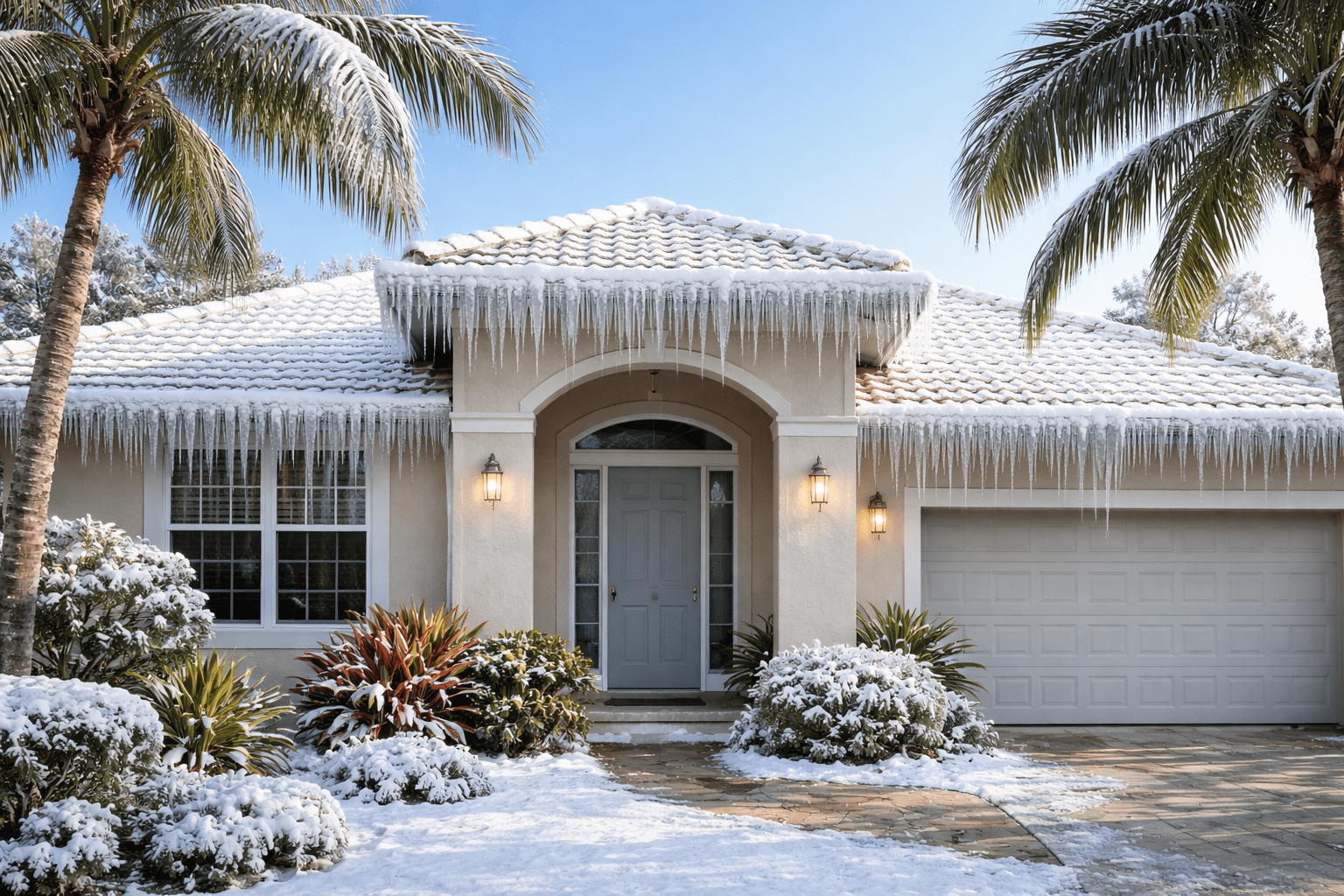
While freezing temperatures are rare in Florida, they can still happen. When they do, it can cause big (and expensive) problems—especially for homes that aren’t built for prolonged cold. A little preparation before a freeze can help prevent burst pipes, damaged plants, and unexpected repair bills.
Here’s how to get your Florida home ready for a temperature drop:
Pipes are the most vulnerable part of a Florida home during a freeze.
What to do:
Insulate exposed pipes, especially ones in garages, crawl spaces, and outside walls.
Cover outdoor spigots with insulated faucet covers (or towels secured with plastic if needed).
Disconnect and drain garden hoses.
Let indoor faucets drip slightly overnight during a hard freeze to keep water flowing.
Many Florida plants aren’t cold-tolerant. Here’s what you can do to protect them:
Bring potted plants inside or into a garage.
Cover outdoor plants with frost cloths, sheets, or blankets (avoid plastic directly on leaves).
Water plants before a freeze—moist soil holds heat better than dry soil.
You might not use your heat often, but it’s important to ensure it works properly before you find yourself needing to turn it on.
Before the freeze:
Test your heating system early.
Change air filters to improve airflow.
If you use space heaters, keep them at least 3 feet away from flammable items and never leave them unattended.
Tip: Never use ovens or grills to heat your home—this is a serious carbon monoxide and fire risk.
Small gaps can let in a surprising amount of cold air.
Quick fixes:
Close garage doors tightly.
Seal gaps around windows and doors with weather stripping, draft blockers, or small blankets if necessary.
Close blinds or curtains at night to help retain heat.
Florida homes often have exposed outdoor systems.
Don’t forget to:
Cover pool pumps and exposed pool equipment.
Turn off water systems and drain exposed lines.
Store outdoor décor, hoses, and fragile items indoors.
Just like thunderstorms, cold fronts pose risks for power outages, too.
Be prepared with:
Flashlights and extra batteries
Charged phones and power banks
Non-perishable food and bottled water
If you use a generator, operate it outdoors only—never inside your home or garage.
Florida freezes may be rare and temporary, but the damage can last long after temperatures rise again. Taking a few preventative steps can save thousands in repairs and keep your home safe and comfortable. Keep this list handy for the next time a Florida freeze is on its way.
Check out more of our homeowner blogs filled with more tips and tricks here. Get in touch with us if you need more information. We’re here to help you soar!